What Drama Induced Behaviour Does to a Relationship
Most people don’t wake up in the morning intending to damage their relationships. Yet every day, relationships are weakened by behaviours that create distance, resentment, frustration, and mistrust. Often, these behaviours aren’t driven by bad intentions. They’re driven by emotional discomfort and our attempts to protect ourselves from it.
One of the most widely recognised models for understanding this is Stephen Karpman’s Drama Triangle. The Drama Triangle describes three unhealthy roles that people can unconsciously move between during conflict and challenging interactions:
Victim. Persecutor. Rescuer
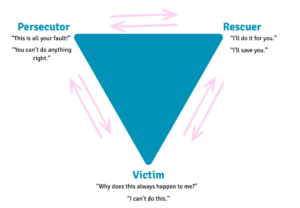
While the roles look different on the surface, they all have one thing in common: they keep people stuck. Rather than solving problems, they create more of them.
The Victim
The Victim position isn’t about someone experiencing genuine hardship or adversity. It’s about believing there is little or nothing you can do about it.
Victim behaviour often sounds like:
-
“Nothing ever works out for me.”
-
“There’s no point trying.”
-
“Why does this always happen to me?”
-
“Nobody understands.”
The challenge is that over time, Victim behaviour can damage credibility and trust. People may initially offer support and understanding, but if problems are continually discussed without any willingness to take action, frustration often follows.
Relationships can become one-sided. The other person may begin to feel drained, unheard, or responsible for fixing problems that aren’t theirs to solve.
Eventually, people stop listening because they believe nothing will change anyway.
The result is often disconnection rather than the support the Victim is seeking.
The Rescuer
At first glance, the Rescuer appears to be the hero of the story.
They help, they advise, they step in and they solve problems.
The difficulty is that Rescuers often help people beyond what is healthy or necessary. Instead of supporting someone to find their own solution, they take responsibility for solving the problem themselves.
This can create two significant issues.
Firstly, the person being rescued can become dependent. They begin to rely on others to make decisions, solve challenges, or provide reassurance.
Secondly, the Rescuer often becomes exhausted and resentful. Many Rescuers tell themselves they are being kind, yet secretly feel frustrated that nobody appreciates how much they do.
The relationship slowly shifts from support to obligation. What began as caring can eventually feel like a burden.
The Persecutor
The Persecutor role is often the easiest to spot.
This position uses blame, criticism, control, judgement, or intimidation to deal with problems.
Persecutor behaviour may sound like:
-
“This is your fault.”
-
“You never get anything right.”
-
“Why are you always causing problems?”
-
“Just do as you’re told.”
While these behaviours may create short-term compliance, they come at a significant cost.
Trust begins to erode, people stop speaking openly, feedback becomes limited and honest conversations disappear. The relationship becomes emotionally unsafe because the other person fears criticism, attack, or judgement.
Whether at home, in friendships, or in the workplace, people are unlikely to bring their authentic selves into a relationship where they feel they will be blamed for doing so.
The Hidden Cost of Drama
The most damaging aspect of the Drama Triangle is that people rarely stay in one role.
They move between them.
A Rescuer who feels unappreciated may become a Persecutor.
A Victim who feels unheard may become a Persecutor.
A Persecutor who faces consequences may suddenly feel like a Victim.
The cycle continues.
Meanwhile, the original issue remains unresolved. Instead of addressing the problem directly, energy is spent defending, blaming, rescuing, explaining, avoiding, and reacting.
Over time this damages connection, weakens trust, creates resentment, and reduces psychological safety.
Moving Beyond the Triangle
Healthy relationships require something different. They require accountability instead of blame, support instead of rescuing, ownership instead of helplessness.
This doesn’t mean becoming cold, detached, or fiercely independent. It means recognising that while we can support one another, we cannot take responsibility for each other’s lives.
The strongest relationships are built when people take ownership of their choices, communicate openly, and respect both their own needs and the needs of others.
When we step out of drama and into healthy communication, trust grows, conversations become easier and conflict becomes something we no longer fear. Relationships become places where people can thrive rather than simply survive.
The quality of our relationships is rarely determined by the challenges we face, it’s determined by how we choose to respond to them. And that’s the key here, “how we choose to respond.”
Thinking of a relationship close to you, which role do you find yourself stepping into most often, and how does that impact your relationship?
At Flo Right EQ™, we believe healthier relationships start with healthier self-awareness.
If this article resonated with you, we’d love to continue the conversation. Join the Flo Right EQ™ Community for practical workshops, tools, and discussions designed to help you communicate with greater confidence, navigate conflict more effectively, and build stronger connections with yourself and others.